
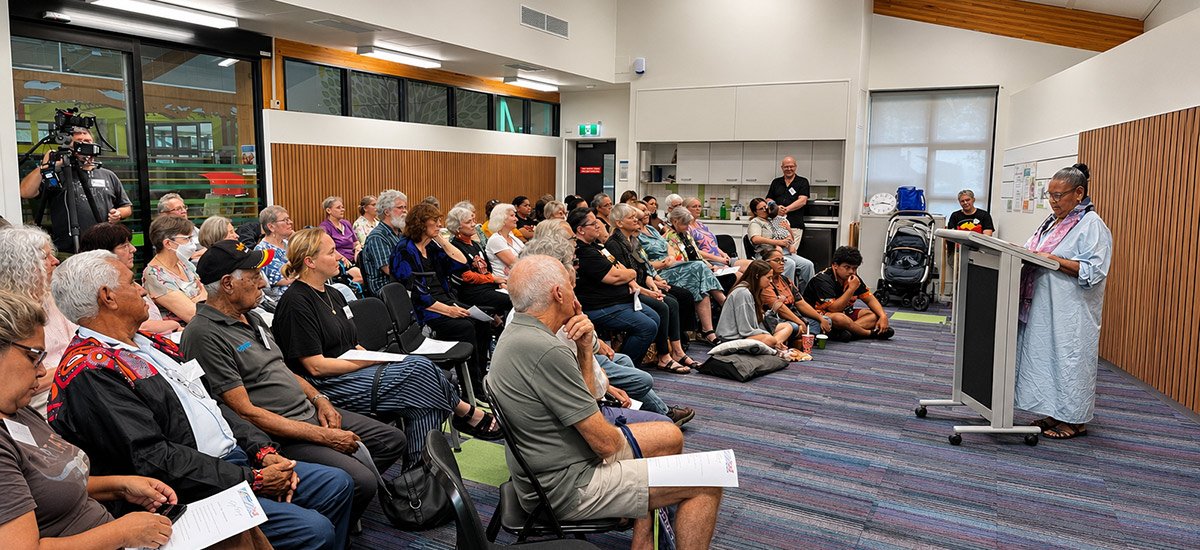
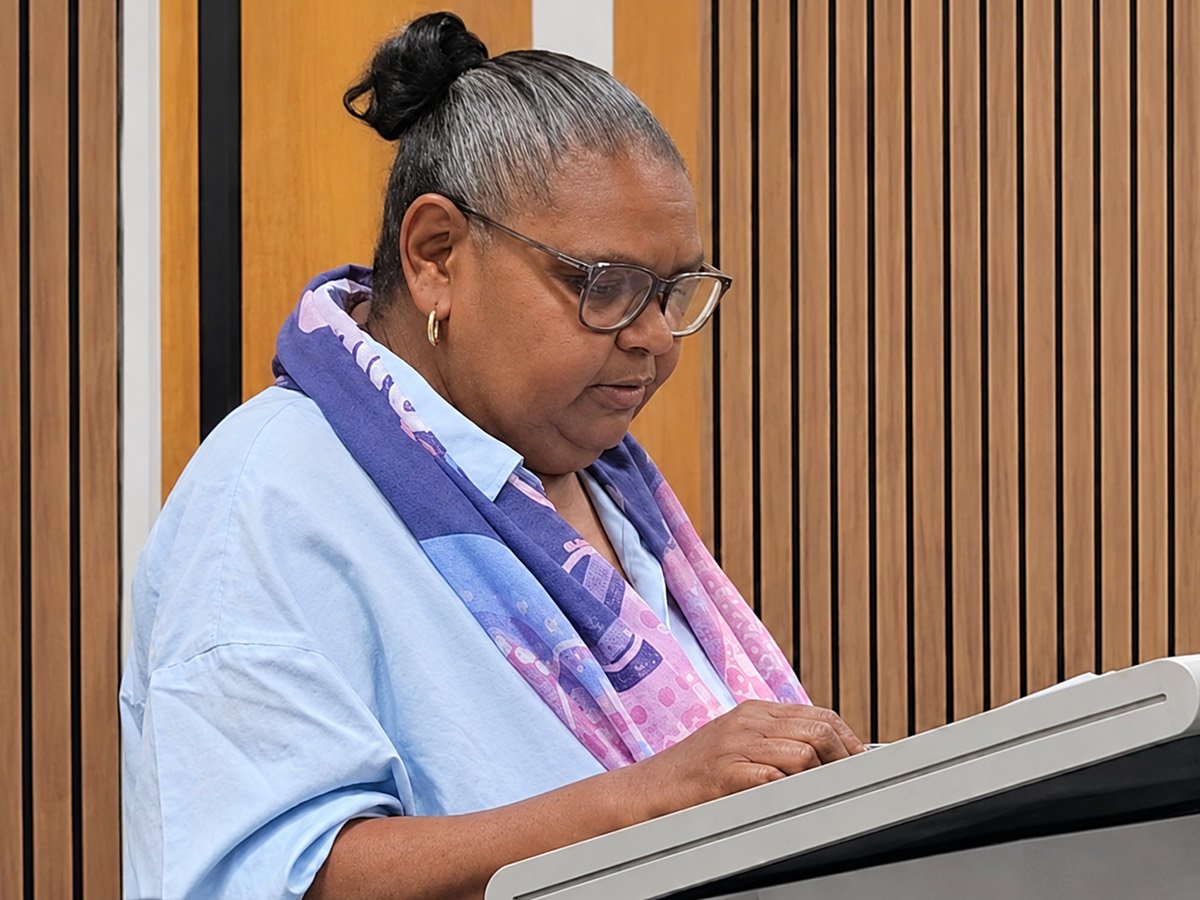
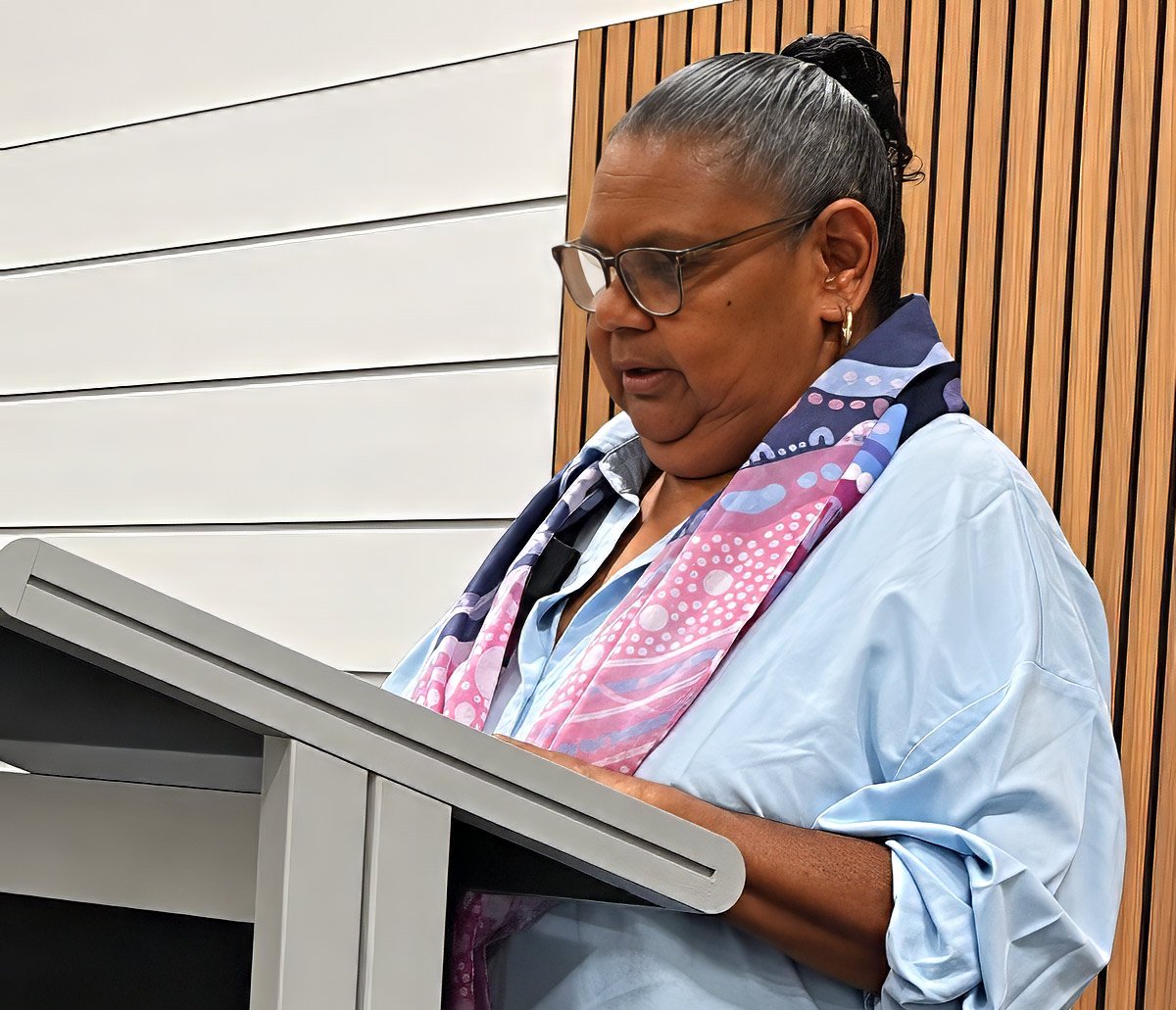
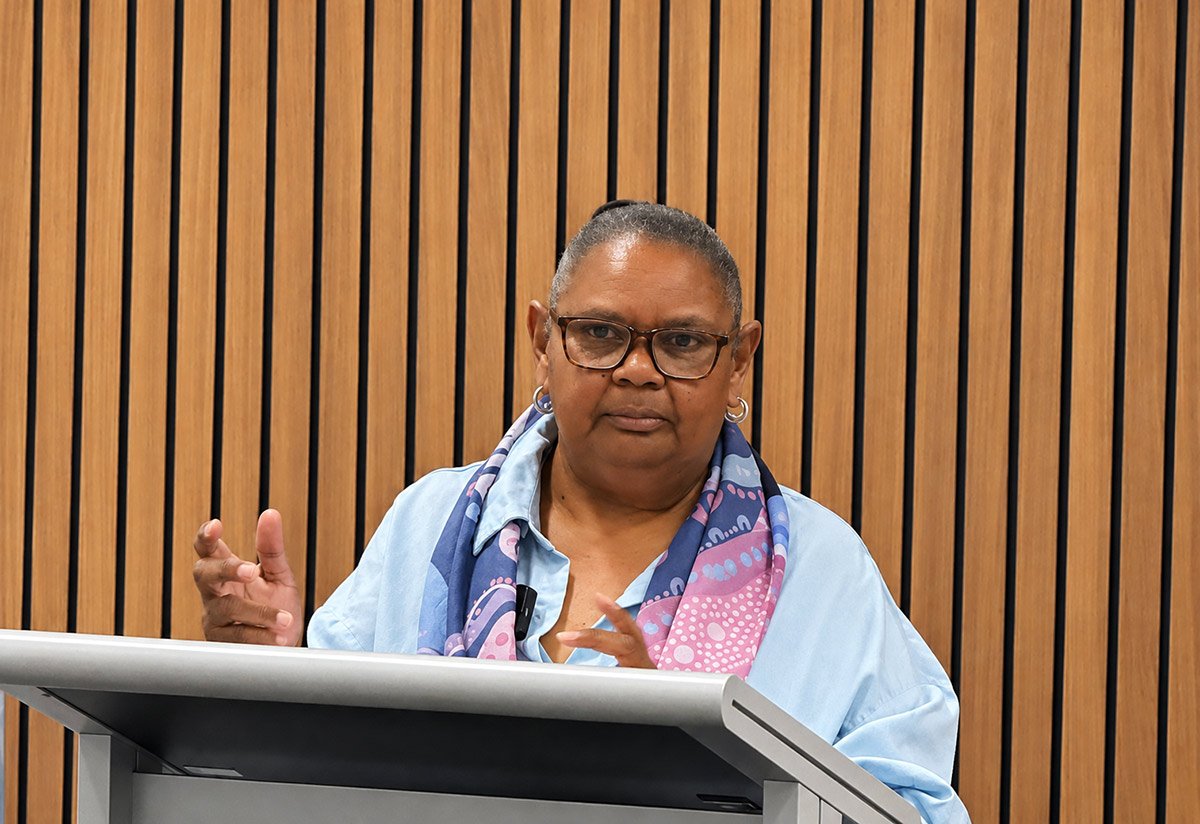
Debbie West has trained fifty or sixty prison recruits at a time without a tremor. On Sunday 1 November 2026, at Truth-Telling at Mitchelton, she stood before a full room, said she was 'shaking like a leaf,' but then spoke confidently and unhesitatingly with poise and grace, not a word wasted.
When she finished, everyone stood, applauding, moved by the bravery of her retelling the story of how she (and her family) survived and surmounted horrific injustice to become invested in supporting others.
In the “Vote of Thanks,” Hilary Langford said that it was the first standing ovation she had witnessed at the Mitchelton sessions she had attended.
Debbie, a Wakka Wakka and Wulli Wulli woman, has worked for more than thirty-five years in the community sector, beside Aboriginal and Torres Strait Islander women in the courts, the prisons, and the child protection system.
She first came to the Mitchelton Truth-Telling Series as a guest in October 2026. As Linda Harnett then drove Debbie home afterwards, while they chatted Linda felt increasingly that Debbie had a truly compelling story to tell. Indeed she did.
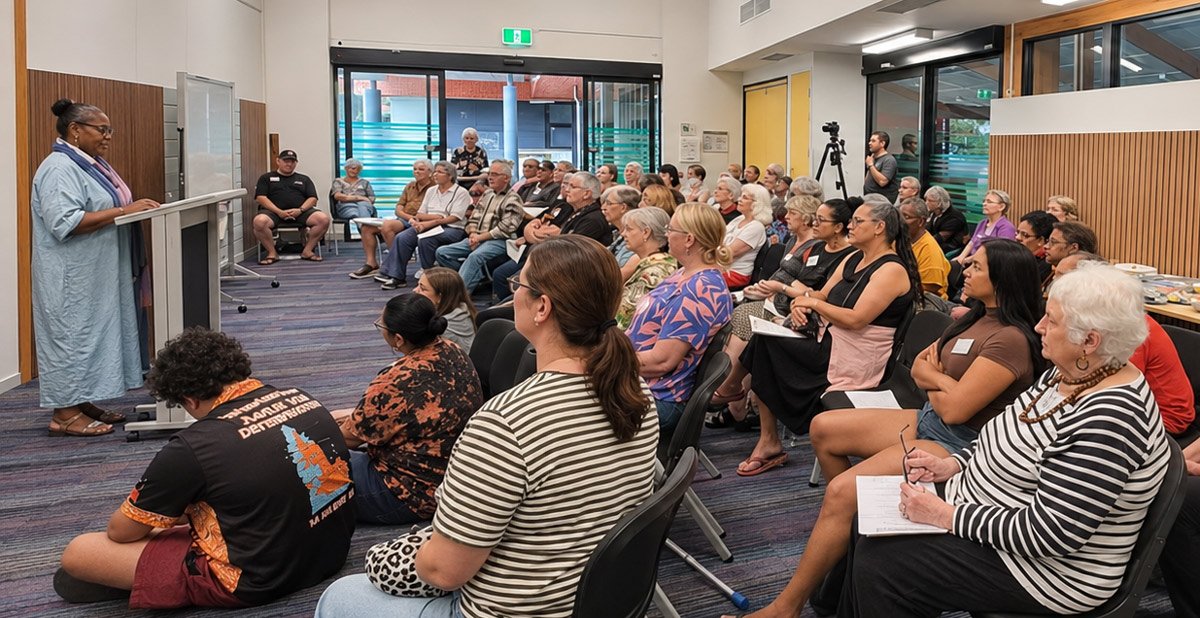
On Sunday, 1 November 2026, at Mitchelton Library, Debbie told her story before a near-overflow audience of 62 interested friends, family, and allies. Luana Sanders of the Coolwell family gave the Acknowledgement of Country and said why she had come: “She is an amazing woman. We need to support each other.”
Speaking from her own carefully prepared text, Debbie explained why she tells the story in public at all: her own life and her aunt’s death are the experience of many Aboriginal families, not just one.
Her account spanned experiences from Cherbourg to the Brisbane Magistrates Court, and from a river-bank at Rockhampton in 1975 to a cemetery at Cherbourg in 2022.
A Childhood Under the Act
Debbie grew up at Cherbourg, where, she said, colonisation was part of everyday life. Her mother, the eldest of nine, was fifteen when the authorities sent her to work on a settler’s property. She had no choice. Debbie went into the care of her grandmother, Janey Hart, which was the norm on the community.
By twelve, Debbie collected the wood, kept the fire, washed clothes without a machine and blankets without running water, and helped raise her younger siblings and cousins.
“These were not simple household chores. They were part of the hardship experienced by Aboriginal families living under government control.”
Debbie West
Through it all, her grandmother taught her resilience, responsibility, and the importance of family. Debbie named her as the strength that stayed with her through the worst years to come.
Six Years of Violence, Three Years Without a Home
Debbie entered a relationship at a very young age. For six years it was violent. Leaving, she said, was never as simple as walking out the door: there were children, fear, and no idea what the future would hold.
In 1986 she escaped with her children to her aunt’s home in Brisbane. Her former partner found them and took her three older children, who were then placed in the child safety system.
When she escaped, she lost her job, her home, and everything she had on the community. For three years she was homeless.
Support came at last through a Catholic service connected with Holy Rosary School, which found her accommodation. With a cousin she started an after-school homework centre at the school for Aboriginal children.
An Aboriginal teacher there urged her to go to university. Debbie told her no: I am too dumb, and have no idea what university is.
Then she graduated with a diploma in Aboriginal and Torres Strait Islander education and found, in her words, a thirst for education.
At Kangaroo Point TAFE she completed a diploma in community services and a diploma in justice studies in twelve months, then studied legal advocacy in Sydney.
“I tell you, once you have those tickets, the doors start to open. And they did for me.”
Debbie West
While raising her younger son, she fought for six years to have her older children returned to her care, and won. She knows what it is to be a mother inside that system, with decisions made about her family and nobody listening.
That experience, she said, is why she chose to support other Aboriginal women who had no voice.
Standing Beside Others in the Courts
Her diploma opened a door in 2007: to a domestic and family violence court support officer position at the Brisbane Magistrates Court. She helped women understand a process and a jargon she had once faced alone.
She went on to the Aboriginal and Torres Strait Islander Legal Service as a court support officer, worked in the Children’s Court, and supported women through family matters, so that what happened to her would not happen to anyone else.
“I wanted these women to know something that I did not always know during my journey: that they have a voice, that they deserve support, and that they should not have to fight their battles alone.”
Debbie West
Today she works with Strong Women Talking, running a program for First Nations women in the prison and in the community.
Queenie Hart: A Family’s Search for Justice and the Long Road Home
Debbie was eleven or twelve in 1975 when her aunt, Queenie Hart, her mother’s second-younger sister, was murdered at Rockhampton. Queenie had gone there to visit an aunt. She met a man, got into a taxi with him, and he took her to a boardwalk on the Fitzroy River. Her body was found there, Debbie said, bound with her own clothing and gagged. The death certificate said she drowned.
Her family was still living under the Act. Queenie’s mother needed the superintendent’s permission to leave Cherbourg for the trial, and he refused it because she could not afford the journey on her pension.
An uncle came from Brisbane and offered to pay. By the time the two women reached the steps of the court, the trial was over and the man charged with the murder had walked free. No court has ever convicted anyone of Queenie’s death.
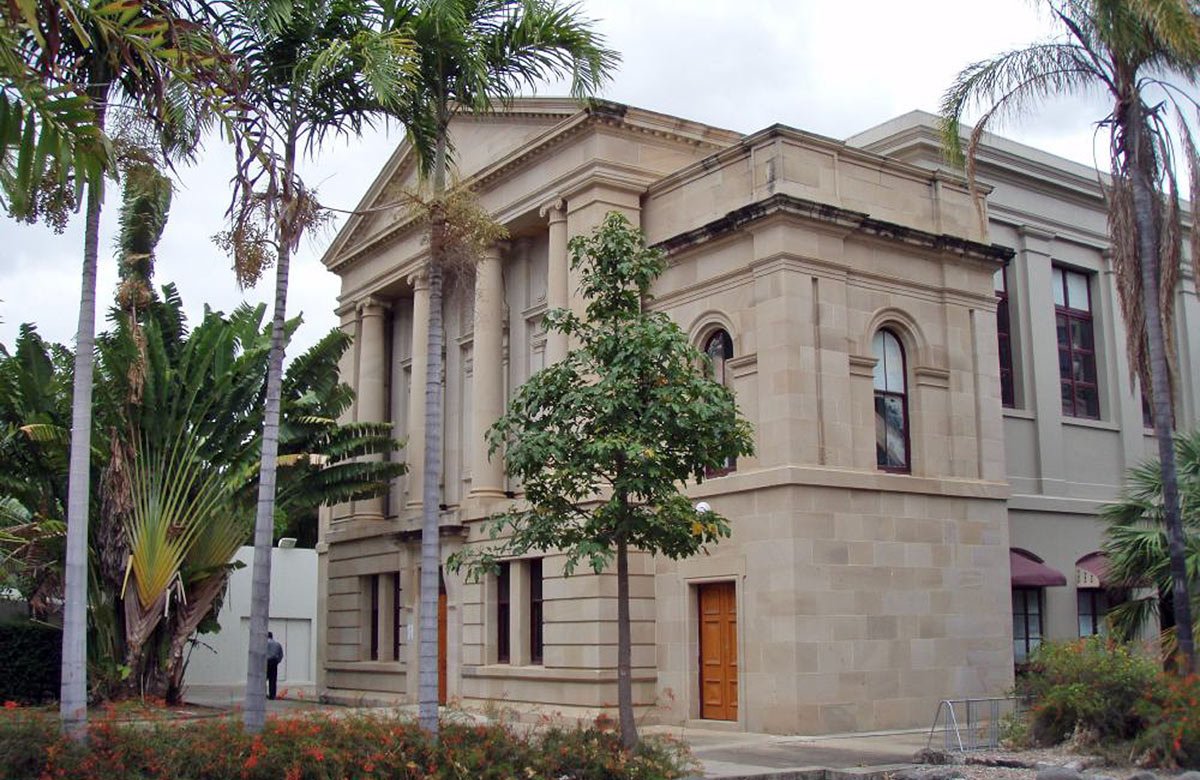
Debbie has since read the transcripts. The accused, a white man married to an Aboriginal woman, had told his wife that he killed Queenie and made her wash the blood from his clothes. Twenty-five witnesses were listed. The taxi driver who drove the pair to the river waited outside the court and was never heard. Her uncle, now dead, gave her the sentence she repeated on Sunday: delayed justice is no justice at all.
“We never got justice. We never will. There was so much more to her than the circumstances of her death. She was someone’s daughter, someone’s sister, someone’s aunty. She was loved, and her life mattered.”
Debbie West
For forty-seven years Queenie lay in an unmarked grave in Rockhampton. Her mother wanted her brought home, but died before it happened. On 5 August 2022 the family laid Queenie to rest beside her in Cherbourg Cemetery. Debbie said she could feel her aunt’s spirit travelling home.
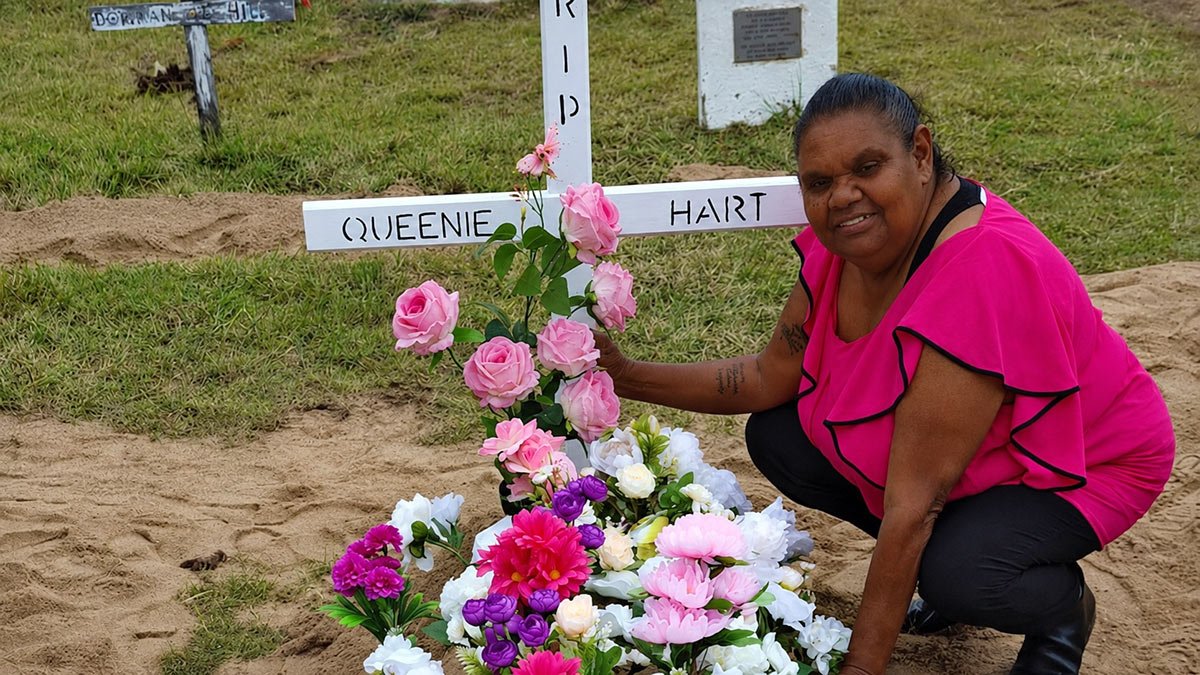
“It was more than bringing someone home. It was about dignity, respect, culture, and the fulfilment of a mother’s wish.”
Debbie West
The Numbers She Asked Everyone to Hold
Two weeks before the session, Debbie said, a young woman of twenty-one was killed. She got a mention on the news, as Queenie did in 1975, and then the news moved on.
Debbie put figures to the pattern. She cited the Australian Institute of Criminology, which said that thirty-two women were killed by a current or former intimate partner in 2024 and 2025, about one every eleven days.
First Nations women, she said, are hospitalised for family violence at twenty-six times the rate of non-Indigenous women, around three and a half thousand hospitalisations in that period.
Behind every figure, she said, is a mother, a daughter, a sister, an aunty, or a grandmother.
She named what makes it harder for Aboriginal and Torres Strait Islander women: the continuing effects of colonisation, intergenerational trauma, racism, and the barriers to reaching services. Then she drew a line.
“Our culture is not the cause of domestic violence, and violence is not an acceptable part of our culture. Our women deserve to be safe. They deserve to be believed when they speak up.”
Debbie West
She closed on the change she has lived.
“I went from being a woman who needed someone to stand beside me to becoming a woman who stands beside others. I am not standing here today because the system failed me. I am standing here because I survived it.”
Debbie West
Questions From the Floor
How can we help? “Walk beside us,” Debbie said. “Not behind us. Not in front of us. Walk beside us, because we need it in the system.”
Are things better for Aboriginal women now? No. She asked everyone to look past the Closing the Gap headlines: in every area concerning Aboriginal and Torres Strait Islander people, the gap is not being met. “The government only wants society to see a little snippet. Walk with us, and we can make that closing of the gap for real.”
Programs for young men. A mother who had brought her son asked where young men could hear these stories. Debbie answered that the early-intervention programs she once saw in Corrections and the courts have lost their funding, especially for young men in detention. Gallang Place, a Brisbane counselling service, still runs a program for men in prison, and nobody knows whether it will survive the next funding round. A guest added the detail: prison support is state money, the state has restructured it away from Aboriginal organisations, and the federal government funds community programs, not prison support.
Inside the prisons. Debbie described what she has seen: men with a mental illness given a tablet and locked down; mothers shackled to a bed while giving birth, and shackled while dying, with guards at the door. “We do not want to be shut down anymore. That is all we ask in this society: listen to us.”
The Murri Court. It helps sometimes, she said, but it is tougher on her clients than the mainstream courts.
What do we tell our daughters? There is support, and you have a family. Walk away if you can, knowing that fear keeps people still; it took her, a strong-willed woman, five or six years. The choice belongs to the woman herself. Keep supporting her, because many women have no big sister or aunty they can trust.
Good news from a school. A teacher described a cultural shift at a Brisbane state high school, through its Reconciliation Action Plan group, that produced one of the school’s first First Nations school captains. Debbie’s reply: “Exactly. We need to connect the good news stories.”
From an Elder who grew up at Cherbourg. She spoke of permits to leave the mission, of parents who could not decide where their own children went, and of being sent away at twelve and a half and not seeing home for five or six years. “I never got the opportunity,” she told Debbie. “I am very proud of you.”
Luana Sanders had the last word from the floor: “We stand on the shoulders of our strong Blak matriarchs who have come generations before us. Thank you, sister.”
What You Can Do Next
When someone asked how to help, Debbie answered: “Walk beside us. Not behind us. Not in front of us.” Five ways to begin, starting with the women already doing the work.
Share these five on their own: truth-telling.online/what-you-can-do-for-first-nations-women.
Go Further
Debbie’s full story, as told to Linda Harnett, is at truth-telling.online/debbie-west.
Her Learning Companion, Standing Beside First Nations Women, gathers the Curtain podcast episode in which she tells Queenie Hart’s story, as well as an important book, film, and a report on First Nations women’s fight for justice in Queensland’s courts and prisons: truth-telling.online/standing-beside-first-nations-women.
Our next session features Aunty Heather Castledine, Kamilaroi-Kooma Elder and long-serving Aboriginal Co-Chair of Reconciliation Queensland, on Sunday, 6 December 2026 at Mitchelton Library. Bookings close at 5 PM on Thursday 3 December 2026, or sooner if every seat is taken: truth-telling.online/rsvp.
After the Session
Click a photograph to view it full size.
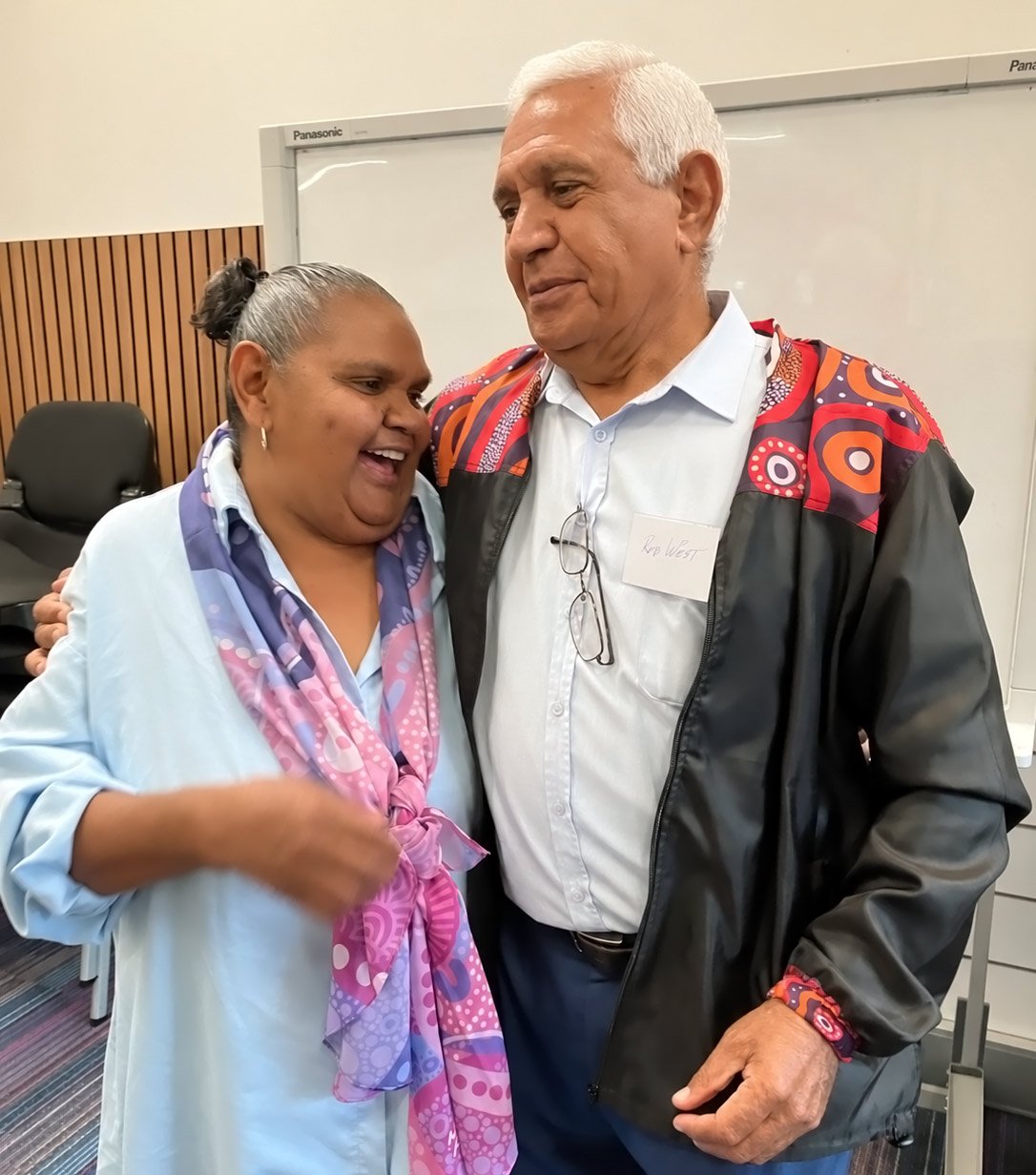
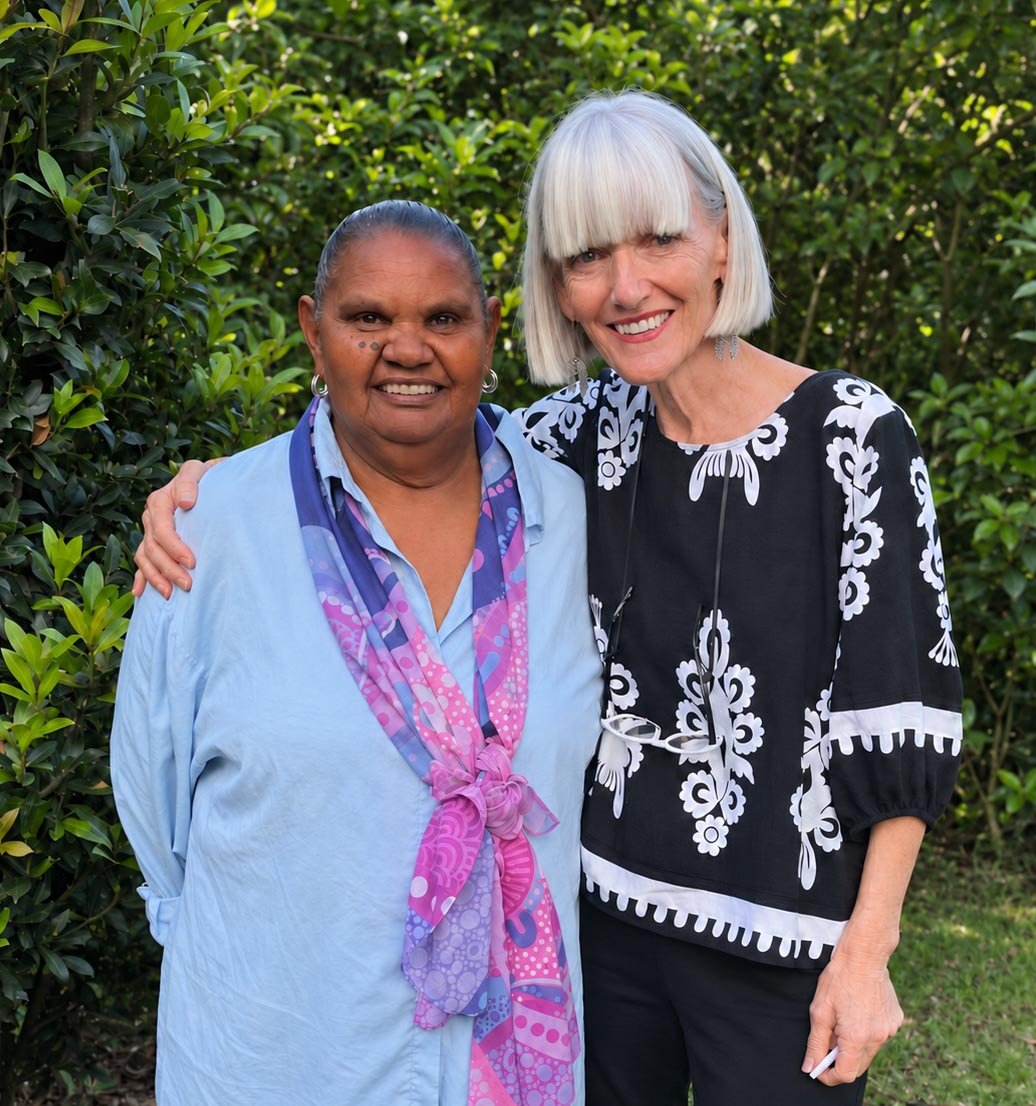
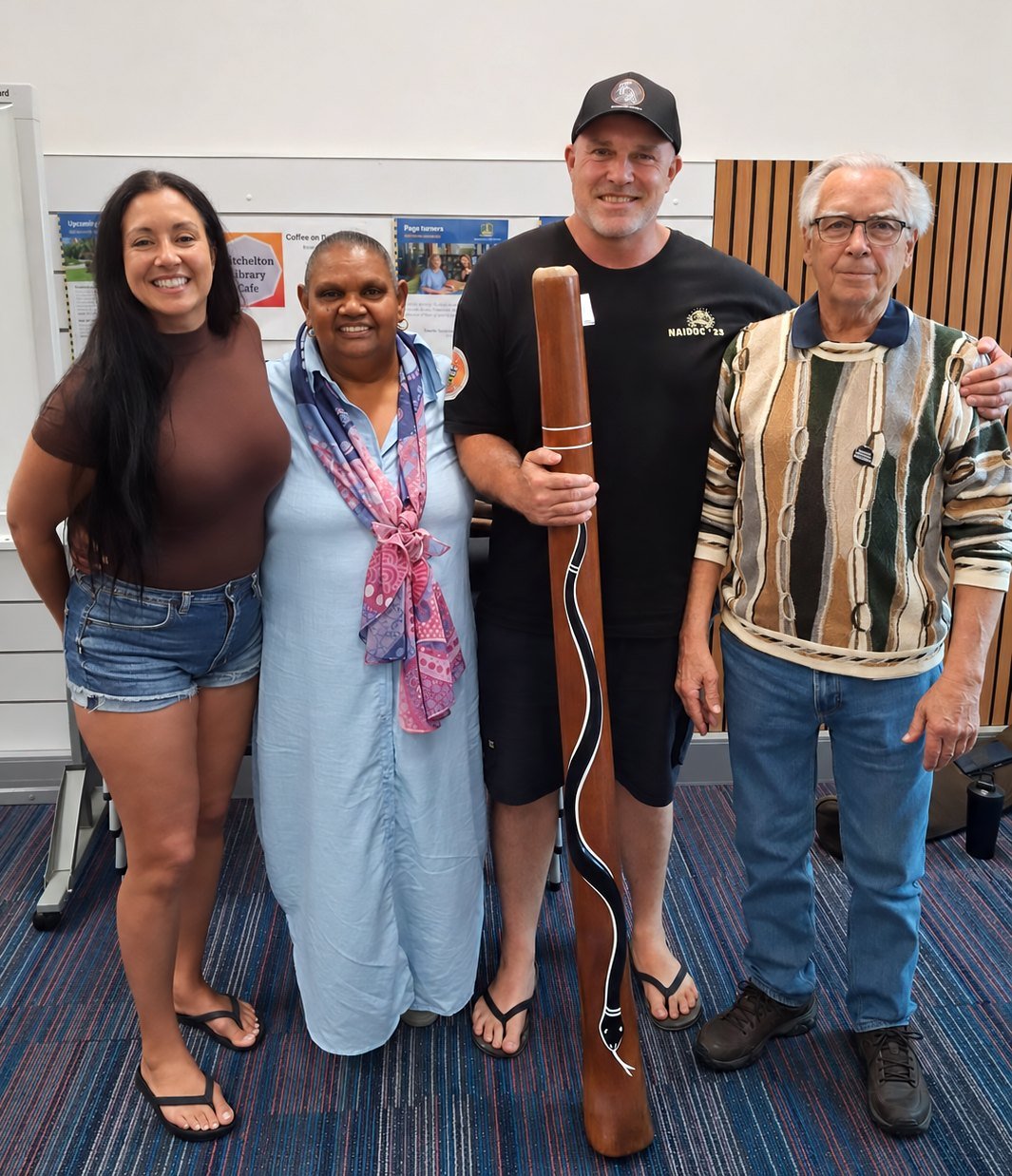
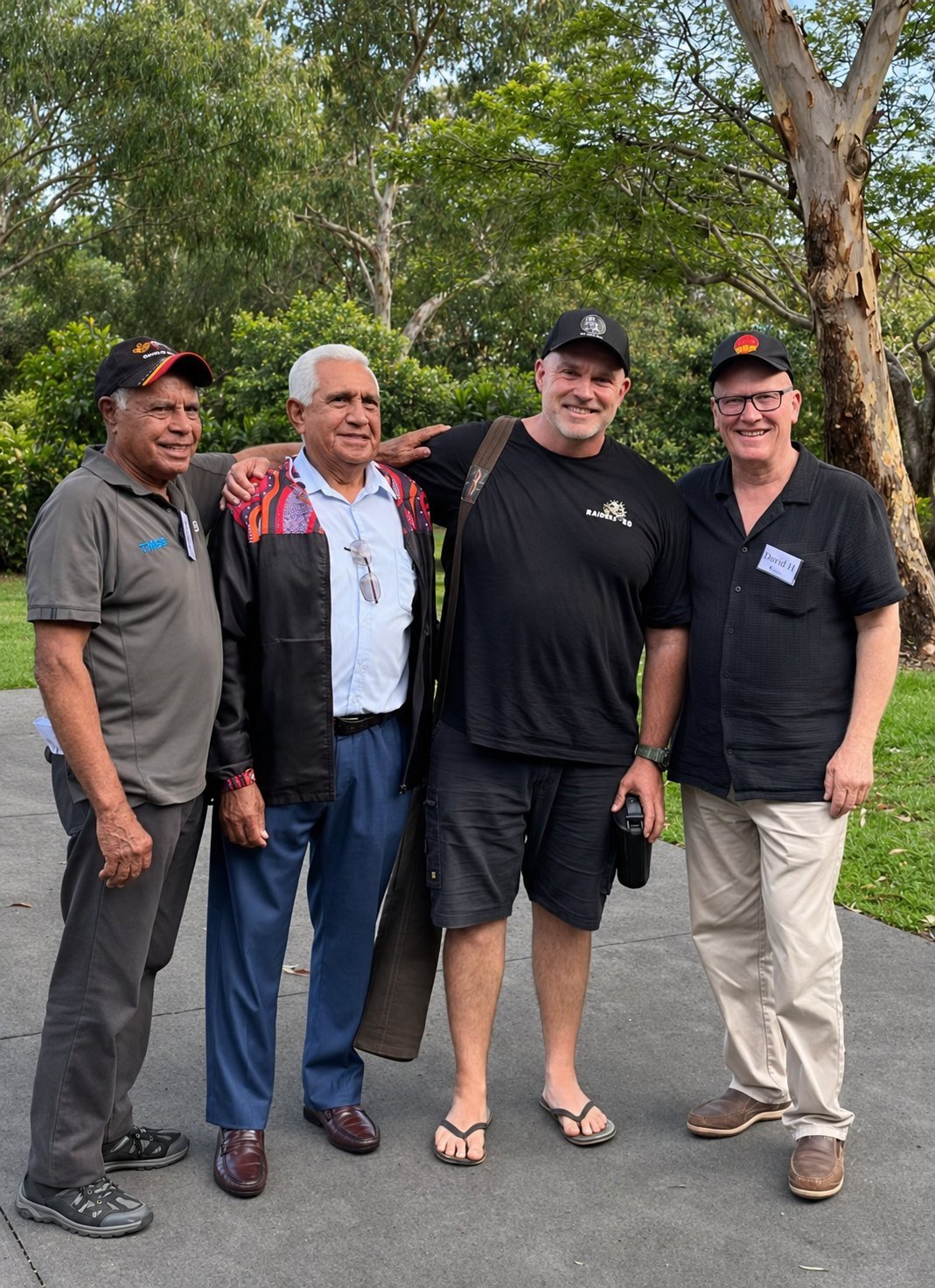
Hear Debbie tell Queenie Hart’s story on the Curtain podcast, then follow a book, a film, and a report into First Nations women’s fight for justice.
Standing Beside First Nations WomenWhat impact did Debbie’s storytelling have on your thoughts and feelings? Write at whatever length you like.
Share Your ThoughtsQuotations come from our permission-based recording of the session, courtesy of David Pawsey.
All Session Reports and Learning Companions