Held at Mitchelton Library
History · Justice · Strength
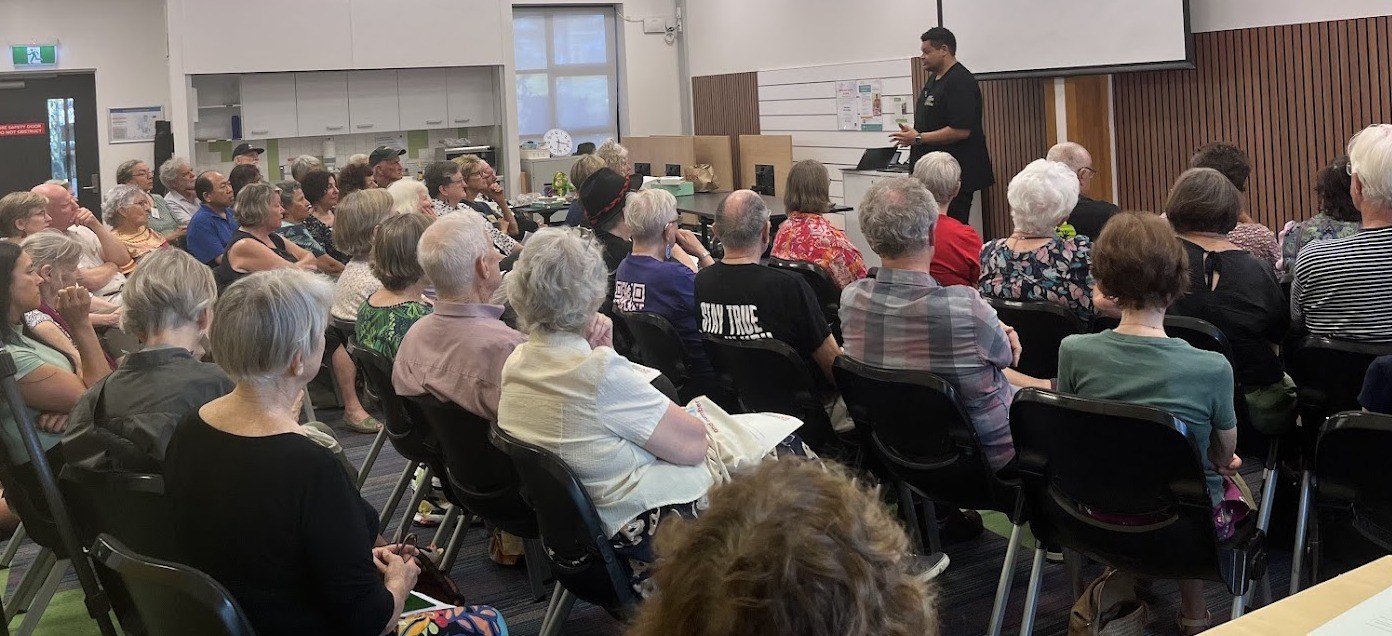
Truth-Telling at Mitchelton is a monthly Sunday gathering at Mitchelton Library, Brisbane, at which First Nations Elders, Historians, and Authors meet non-Indigenous Australians to voice their Stories, their Histories, and their living Culture, in their own words, on their Country.
Each session welcomes a guest speaker to share their story: their history, their culture, their lived experience, and the long work of resilience, memory and belonging. We listen together, and afterwards we share refreshments and conversation.
The truth holds injustice and grief, and it holds achievement, artistry, humour, and strength. Queensland’s own truth-telling body put the principle plainly before Parliament dismantled it: it’s not all bad, and the good needs telling too. Our First Nations guests present both.
The free gatherings are held at Mitchelton Library. Truth-telling is the beginning of walking together with respect. You are welcome: to come, listen, learn, and then to act for structural and constitutional change.
The Uluru Statement ends with First Nations Peoples inviting the Australian people to walk with them in a movement for a better future.
Beyond the impact of a Truth-Telling session, you may wish to use the books, films, podcasts, and archives gathered here to equip yourself for the journey ahead.
Books, Films and Podcasts by First Nations Authors
In 2022 Debbie West and her family brought her aunt, Queenie Hart, home to Cherbourg. Queenie, a Wakka Wakka woman, was murdered in Rockhampton in April 1975 at twenty-eight, and lay in an unmarked grave in North Rockhampton for forty-seven years. Nobody was ever convicted. After a farewell ceremony from the Darumbal people in Rockhampton, Queenie now rests on Wakka Wakka Country, beside her mother, Janey Hart.
Read the ABC Report on Queenie Hart, 18 August 2022
Read Debbie West’s Full BiographyOpen Her Learning Companion
On Sunday 1 November 2026, Debbie West speaks at Mitchelton Library. We invite you to join us to hear and connect with this advocate for First Nations women.

Where to begin, after a session ends.
The Uluru Statement from the Heart spares its readers nothing. It sets out incarceration without parallel anywhere on earth, children taken from their families at unprecedented rates, and a torment of powerlessness that it names as structural rather than personal.
Then, having established all of that, it declines to accuse. It invites. Its final words ask the Australian people to walk together in a movement for a better future.
Accepting that Invitation asks something of whoever accepts it. Coming to a session on the first Sunday of the month is where most people start. A speaker makes an impact that stays with you, and the questions or issues they raised return to you. Reading, watching, listening, and researching is how non-Indigenous Australians develop answers for themselves.
First Nations authors, directors, and voices come first on the resource pages we offer here.
Start anywhere you wish. One book or one documentary, as the Charter says, is a real beginning.
Elders and Cultural Custodians, historians, authors, community leaders, and activists have led these sessions since March 2024.


Flyers, full descriptions, and the testimony several speakers gave to Queensland’s Truth-telling and Healing Inquiry.
To RSVP, ask a question, or find out about upcoming sessions, please send a message.
We welcome hearing from you.