Held at Mitchelton Library

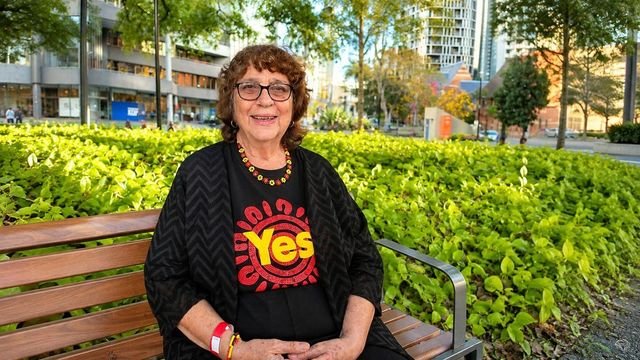
Rosalie Raciti trained as a kindergarten teacher at the Brisbane Kindergarten Training College in Kelvin Grove, graduating in 1964. She has spent the next six decades shaping how Queensland’s youngest citizens come to respect and understand Aboriginal and Torres Strait Islander cultures.
Rosalie worked at the Palm Island Aboriginal community, and travelled throughout Queensland as a preschool adviser to Aboriginal and Torres Strait Islander communities. She later returned to study for a Bachelor of Education at QUT.
Those early work experiences contributed to her lifelong commitments. Palm Island was one of the settlements to which the Aboriginals Protection and Restriction of the Sale of Opium Act 1897 sent people removed from their own country, and the communities Rosalie advised across Queensland were living with what that Act had set in motion. Her interest in truth-telling did not begin in a library.
During the development of Queensland’s Years 1 to 10 curriculum she served on the Ministerial Advisory Council on Aboriginal and Torres Strait Islander Education, and was the Queensland School Curriculum Council’s nominee for Aboriginal and Torres Strait Islander education.
Those roles placed her inside the state’s formal curriculum processes at the moment when recognition of the value and importance of First Nations perspectives in education was beginning to be taken seriously.
From 2003 to 2022 she served on the Management Committee of Reconciliation Queensland Incorporated.
In 2019, the organisation publicly acknowledged her, alongside Elder Aunty Heather Castledine, for the work she put into planning that year’s Defying Boundaries walk.
The walk exists because of two streets. Brisbane has a Boundary Street in Spring Hill and another in West End, and they mark the line Aboriginal people were forbidden to cross in the evenings and on Sundays. Most people who live in those suburbs have never been told why the streets carry that name.
Two streets, one line. Brisbane has a Boundary Street in Spring Hill and another in West End. They are not a coincidence of naming. Together with connecting streets they marked the perimeter of the colonial town, and Aboriginal people were expected to be outside it after an evening curfew, and excluded altogether on Sundays. Similar boundary lines existed in other Queensland towns, including Toowoomba and Townsville.
How it was enforced. Aboriginal people were admitted to the township during the day, largely because their labour was wanted. A report cited by Reconciliation Queensland, from historian Dr Ros Kidd, records that mounted troopers rode about cracking stock whips to signal that Aboriginal people were to leave. Wangerriburra and Birri Gubba Elder Sam Watson described the same enforcement more bluntly: mounted police used bull whips to move Blacks out of the area.
What the record shows. Brisbane historian Dr Ray Kerkhove, who wrote West End to Woolloongabba for FAIRA Aboriginal Corporation in 1985 and later a report for Brisbane City Council, describes the curfew as a de facto policing practice running roughly from the 1850s to the 1940s: real, and backed by force where applied, but not uniformly enforced across every one of those decades.
His report is worth reading in full: The Aboriginal Heritage of Brisbane’s Boundary Streets (Brisbane City Council, 2021, 39pp, PDF).
Why the walk began. Rosalie Raciti and Aunty Heather Castledine set out to walk from one Boundary Street to the other, and secured the funding and the police permits between them. The point, as Aunty Heather put it, was to stop it becoming a hidden history: when you do not know, how can you change it? Under Reconciliation Queensland the walk became the annual Defying Boundaries.
The route. Participants gather at St James College on Boundary Street, Spring Hill, and walk as a police-escorted group through the CBD to Reddacliff Place, across Victoria Bridge, along Melbourne Street and down Thomas Street, crossing at Boundary Street, South Brisbane, and finishing at Bunyapa Park in West End. Free, family-friendly, and closing with a guest speaker, entertainment and a sausage sizzle. Certificates of completion have been handed out at the finish.
The renaming argument. In January 2016 someone changed West End’s Boundary Street signs overnight to read “Boundless Street”, and a formal renaming was briefly considered. Sam Watson opposed it: “That name is written into the blood of our people.” Aunty Heather Castledine argued that changing the name would not change the history, and that the name, explained, could teach it. The walk is a practical answer to that argument: keep the name on the map, and make sure people know what it means, by walking it together once a year.
When it is held. The date moves: May, June and August have each hosted the walk. Reconciliation Queensland’s events calendar is the place to check for future walk dates.
Compiled from Reconciliation Queensland’s public event announcements, contemporary news coverage, and published research by Dr Ray Kerkhove and Dr Ros Kidd. Not authored or endorsed by Reconciliation Queensland or by Traditional Owners. Corrections welcome.
Rosalie helped begin that walk, working with Aunty Heather Castledine to secure the funding and the police permits. Under Reconciliation Queensland it became the annual Defying Boundaries. On 10 August 2019 it finished at Bunyapa Park in West End with song, performance and craft stalls. It is a history lesson conducted on foot, along the route itself.

Rosalie also carried her advocacy into the professional literature. In 2014 she presented at an Early Childhood Australia conference on whether reconciliation was myth or reality within the Early Years Learning Framework.
She went on to co-author, with Aunty Denise Proud, Sharing cultures in early childhood settings: Aboriginal and Torres Strait Islander perspectives, in Educating Young Children (volume 22, number 2, 2016, pages 30 to 32, PDF), and in October 2022 joined Aunty Denise and Dr Melinda Miller at the Early Childhood Australia National Conference in Canberra for a featured session, In conversation with Aunty Denise Proud: Reconciliation in early childhood services.
All children should be learning about the place of Aboriginal and Torres Strait Islander peoples in the history of this country. They should have access to appropriate resources. It is important to embed Aboriginal and Torres Strait Islander ways of doing and being within the curriculum. To be valued, this acknowledgement needs to be there all the time and not simply brought out during Reconciliation Week and NAIDOC Week.
Rosalie Raciti and Aunty Denise Proud

Alongside her education work, Rosalie has spent many years preserving local history. As a senior member of the Windsor and Districts Historical Society, including a term as Senior Vice-President, she took a leading role in the annual ANZAC Day commemoration at Windsor War Memorial Park, acting as Master of Ceremonies for many years.
The two commitments are closer than they appear: both concern how a community remembers, whose voices enter the record, and what historical knowledge does for the people who hold it.
Her approach to these Mitchelton Library Truth-Telling gatherings follows from that. Her role is not to speak for First Nations people, but to create the circumstances in which First Nations voices are heard, respected and taken seriously.
Drawing on the network she has built and the trust she has accumulated among First Nations Elders across decades of work in Queensland, Rosalie continues to bring Elders to the Mitchelton speaker series.
Reconciliation, on her account, is not a single event or a single program. It is a continuing process of education, listening, remembering, relationship-building, and creating opportunities for truth to be heard.
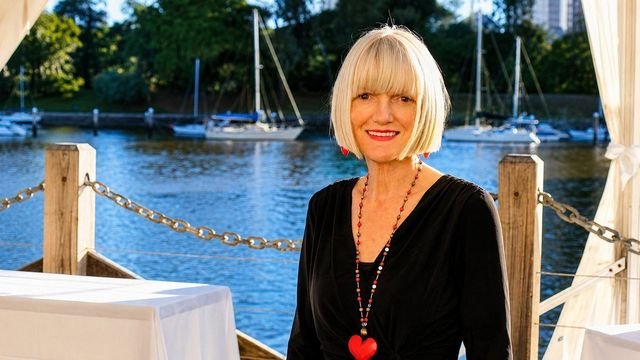
Linda Harnett has spent much of her working life strengthening communities, through early childhood education, family welfare, disability services, women’s services, community advocacy and, increasingly, reconciliation and truth-telling.
Her career has been grounded in the practical work of building organisations and services that change people’s lives. For twenty-eight years she managed a Family Day Care Service, where she helped pioneer the incorporation of Aboriginal and Torres Strait Islander perspectives into early childhood education and led the development of the first Early Years Reconciliation Action Plan.
That plan, for Bayside Family Day Care, is still worth reading in full (PDF): approved by Reconciliation Australia, built on an action research project into cultural competence, illustrated with Quandamooka Toponym by Quandamooka artist Megan Cope, and setting out its commitments as dated, measurable targets rather than sentiments.
Her wider professional experience includes work as a Youth and Family Worker in Child Safety, a Coordinator in Disability Services, and Queensland Project Coordinator for the Narragunnawali Reconciliation in Education Program.
Alongside that career she has maintained an extensive commitment to voluntary service. She was founding President of a Community Legal Service, helped secure funding for a local domestic violence service and women’s shelter, served on its board for more than five years and became a Life Member, and represented her sector on the Services Union Industry Committee.
Her contribution to Australian community life was recognised with an Australian Centenary Medal for distinguished service to early childhood education.
Reconciliation became steadily more central. Linda served more than nine years on the Executive Board of Reconciliation Queensland.
Her work with Narragunnawali carried that commitment into schools and early-learning communities, helping educators move reconciliation from aspiration into everyday practice.

Linda’s public-event counterpart to Rosalie’s walk is the National Reconciliation Week Candlelight Vigil in King George Square, central Brisbane. Linda played a central role in establishing the vigil and, working closely with respected First Nations Leader Stephen Mam, helped plan, organise, and deliver the event that has since become an annual gathering.
Linda’s contribution has included helping secure funding, inviting and confirming speakers, obtaining police permits, and working alongside Stephen Mam on the many practical arrangements required to bring the vigil together. Stephen secured the musicians who gave the gathering an important cultural and emotional dimension.
The 2026 vigil drew Natalie Lewis, a Gamilaraay woman and, that evening, still Queensland’s Aboriginal and Torres Strait Islander Children’s Commissioner, and Giridharan Sivaraman, the Race Discrimination Commissioner at the Australian Human Rights Commission, speaking on youth justice and over-incarceration, with music from Getano Bann.
31 May 2026, the evening of the Candlelight Vigil, coincided with the last day of Natalie Lewis’s term as Commissioner, and she spent its final hours in King George Square, speaking passionately and at length to an intentional gathering of concerned people holding candles rather than to a parliament or a press conference.
A child who spends a year in detention does not get that year back. A child removed from family does not recover lost moments simply because a review later identifies mistakes. A child failed by a system cannot return to the beginning and try again once adults finally decide to act.
Natalie Lewis, speaking at the vigil, 31 May 2026 · read the full speech
During the 2023 referendum on an Aboriginal and Torres Strait Islander Voice to Parliament, Linda led the Wynnum-Manly Yes campaign.

After the referendum, rather than permit the relationships and energy built during the campaign to dissipate, she founded and led First Nations Allies Wynnum, an ongoing local network through which non-Indigenous people could keep learning, listening and supporting First Nations justice and self-determination.
Linda secured credentials that required study and commitment for every stage and role in her professional life: a Master of Arts in Women’s Studies, a Bachelor of Community Welfare, and diplomas in Business, Human Resources, and Early Childhood Education and Care, with an Associate Diploma in Residential Care and a Certificate in Welfare Studies. People who know Linda well can testify that she continues to read and study First Nations history, and to advocate for human rights.
Through these involvements runs a consistent theme: an aspirational commitment to social justice, and a conviction that social change begins with relationships and education, and a willingness to listen and learn that culminates in practical action.
For Linda, truth-telling is not simply about recovering the past. It is part of developing more honest relationships in the present, and building toward a more just Australia for the future.
Rosalie and Linda coordinate the Mitchelton Truth-Telling series together, creating regular opportunities for First Nations Elders, community leaders, historians and educators to tell the stories that conventional accounts of Australian history have too often neglected or suppressed.
The Mitchelton Truth-Telling series holds open a regular community space for listening, learning, conversing, and acting on new insights, on the first Sunday of every month. The terms on which it does so are set out in the Charter.
A question about a session, a speaker to suggest, or anything else you wish to raise. One of us will reply.
 Rosalie
 Linda
LindaYour details are held securely in confidence, used only to organise the sessions and to respond, and we never give or sell your information to any third party.
